


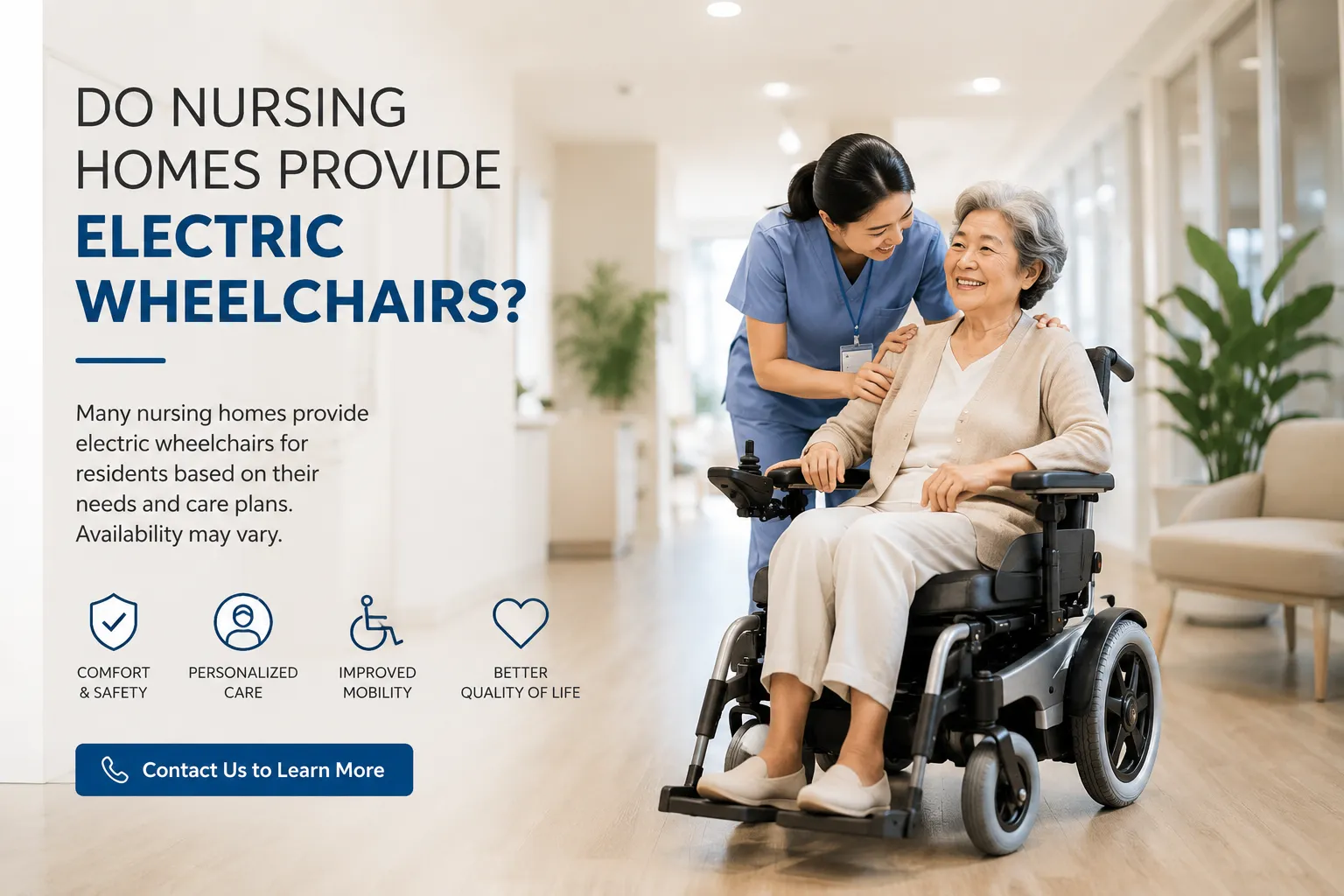
If you or a loved one is moving into residential aged care, one of the first practical questions is about mobility: will the facility supply an electric wheelchair, or is that something you need to arrange yourself? It’s an important question, because the answer affects both independence and cost. The short version is that aged care homes are required to provide standard mobility aids such as manual wheelchairs and walking frames, but a personal electric wheelchair is generally not included and is the resident’s own responsibility. Below we explain exactly what facilities must provide, what they don’t, how funding works, and how to choose the right power chair for life in care.
What Aged Care Homes Are Required to Provide
Under Australia’s aged care rules, every approved residential aged care home must supply a defined set of standard mobility equipment as part of the care it delivers. This includes manual wheelchairs, walking frames, wheeled walkers, walking sticks, tilt-in-space chairs, and the equipment staff use to move and transfer residents safely. Homes must also provide ramps, lifts and handrails so residents who use wheelchairs can move around the building.
These items are shared equipment for general use, assigned according to assessed need rather than personal preference. They cover the basics of moving safely between rooms and around common areas.
So Do They Provide Electric Wheelchairs? The Honest Answer
No. The national service list that sets out what aged care homes must provide specifically excludes motorised wheelchairs, electric mobility scooters, custom-made aids, and any mobility aid requested on the basis of personal preference. In other words, a powered wheelchair is treated as a personal item, not part of the standard equipment a facility supplies.
What this means in practice is that if a resident wants the independence of their own electric wheelchair, they will generally need to buy or hire it themselves. This is actually good news in one respect: it means the resident gets to choose a chair that genuinely suits their body, their needs and the way they want to move, rather than relying on whatever shared equipment happens to be available.
Why a Personal Electric Wheelchair Is Worth It
Independence and movement have a direct effect on wellbeing in aged care. When a resident can move freely, they can join activities, visit common areas, spend time outdoors, and stay connected with other people rather than waiting for someone to assist them. That sense of control supports both physical health and mental health, and it eases the load on care staff at the same time.
A personal electric wheelchair delivers that freedom on the resident’s own terms. Instead of relying on a shared chair and someone available to push it, they decide when and where they move. For people with limited upper-body strength who can’t self-propel a manual wheelchair, a powered chair is often the difference between staying mobile and staying put.
Can You Bring Your Own Power Chair Into Aged Care?
In most cases, yes, but it’s worth checking the facility’s policy first. Many homes welcome residents bringing their own powered wheelchair, while some apply reasonable conditions for shared safety. Common requirements include a speed limit in busy common areas, confirmation that the chair fits through doorways and into lifts, and a suitable place to charge it. Confirming these details before you buy means the chair you choose suits the building as well as the user. The same considerations apply to other powered mobility options and to larger bariatric wheelchairs, where size and turning clearance matter most.
How Funding Works in Australia
The cost of a personal electric wheelchair can often be reduced or covered through one of several funding pathways, depending on the person’s circumstances:
- Support at Home: For older Australians living in their own home, mobility equipment can be funded through the Support at Home program, which replaced Home Care Packages from 1 November 2025. Equipment is funded through its Assistive Technology and Home Modifications (AT-HM) component. Note that for people already living in residential aged care, equipment funding generally works differently, as the facility covers standard aids and personal powered equipment is usually self-funded or funded through other pathways.
- NDIS: For people whose access request was made before age 65 and who have an eligible disability, an electric wheelchair may be funded as assistive technology where it is assessed as reasonable and necessary. NDIS funding assistance is available for eligible participants.
- DVA: Eligible veterans may access mobility equipment through the Department of Veterans’ Affairs Rehabilitation Appliances Program.
Most funding pathways require an assessment by a relevant health professional, such as an occupational therapist or physiotherapist, who recommends the right type of chair. We work closely with occupational therapists and support coordinators and can provide product trials, assessments, and the documentation your assessor needs to support a funding application.
What to Look For in an Electric Wheelchair for Aged Care
Not every power chair suits a care environment. A few features make a real difference day to day:
- Compact and manoeuvrable: Tighter spaces, doorways and lifts call for a chair with a small turning circle and precise control.
- Lightweight and foldable: Easy to transport for outings and medical appointments, and simple for family to load into a vehicle.
- Comfortable, supportive seating: Important for residents who spend extended time seated.
- Simple, reliable controls: Intuitive joystick operation matters, especially for users with reduced hand strength or dexterity.
- Adjustable speed settings: The ability to limit speed for safe use in shared indoor areas is valuable in a facility setting.
- Dependable battery range: Enough capacity to get through a day of activities without a mid-use recharge.
Our range of electric wheelchairs includes lightweight folding models built for exactly this kind of use, easy to manoeuvre indoors, simple to transport, and supported by genuine parts stocked and dispatched Australia-wide. The Air Hawk 24 Folding Electric Wheelchair is a popular choice for aged care and indoor use, offering programmable speed settings, precise control and folding portability for appointments and outings. For guidance on choosing between models, our electric wheelchair buying guide compares folding, reclining, lightweight and heavy-duty options, and our dedicated guide to electric wheelchairs for hospitals and aged care covers what matters most in shared indoor environments.
Trial Before You Commit
Choosing a power chair is a significant decision, and it helps to try one before buying. We offer hire and trial options so a resident can test a chair in their own environment and confirm it suits them, the facility and their daily routine before committing to a purchase.
Talk to Us About the Right Chair
Choosing an electric wheelchair for life in aged care comes down to matching the chair to the person and the facility. We’re an NDIS-registered, ISO 9001 certified mobility equipment supplier with more than 18 years of experience helping Australian families do exactly that. If you’d like guidance on models, funding or fit, get in touch with our Smithfield showroom and our team will help you find the right option.
Browse our electric wheelchairs range or contact our team on (02) 8740 8963 to discuss your needs.
Frequently Asked Questions
Do aged care homes provide electric wheelchairs?
No. Aged care homes are required to provide standard mobility aids such as manual wheelchairs, walking frames and walking sticks, but motorised wheelchairs, electric mobility scooters and custom aids are specifically excluded from what a facility must supply. A personal electric wheelchair is generally bought or hired by the resident.
What mobility equipment must an aged care home supply?
Under Australia’s aged care rules, homes must provide manual wheelchairs, wheeled walkers, walking frames, walking sticks, tilt-in-space chairs, transfer equipment used by staff, and building access features such as ramps, lifts and handrails. These are shared items assigned according to assessed need.
Can a resident bring their own electric wheelchair into aged care?
In most cases yes, though it’s best to check the facility’s policy first. Some homes apply conditions such as a speed limit in shared areas, confirmation the chair fits through doorways and lifts, and a suitable charging point. Confirming these details before buying ensures the chair suits both the resident and the building.
Who pays for an electric wheelchair in aged care?
The resident is generally responsible for a personal powered wheelchair, but the cost can often be reduced or covered through a funding pathway depending on circumstances, including NDIS assistive technology funding for eligible participants, the DVA Rehabilitation Appliances Program for eligible veterans, or Support at Home for older Australians living in their own home.
Is an electric wheelchair covered by Support at Home?
Mobility equipment can be funded through the Support at Home program’s Assistive Technology and Home Modifications component for older Australians living at home. Support at Home replaced Home Care Packages from 1 November 2025. For people already living in residential aged care, equipment funding generally works differently, so it’s worth confirming your situation with an assessor.
What is the best electric wheelchair for aged care use?
A chair suited to aged care is typically compact, foldable, easy to control and able to limit its speed for safe use indoors. The Air Hawk 24 Folding Electric Wheelchair is a popular choice for facility and indoor use thanks to its programmable speed settings, precise control and folding portability. The right model depends on the user’s size, strength and daily needs, which is why a trial before buying is recommended.
Can I trial an electric wheelchair before buying?
Yes. We offer hire and trial options so a resident can test a chair in their own environment and confirm it suits them, the facility and their daily routine before committing to a purchase.



