Compare ramp types, measurements and access requirements below. For an entrance that needs a fixed solution, explore our custom wheelchair ramp design and installation.
Different ramps solve different access problems. Choose the ramp type based on the
vertical rise, available space, mobility equipment and how the ramp will actually be used.
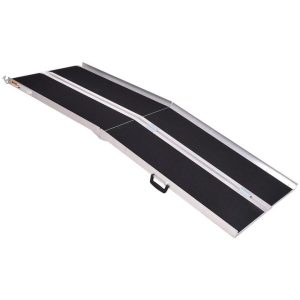
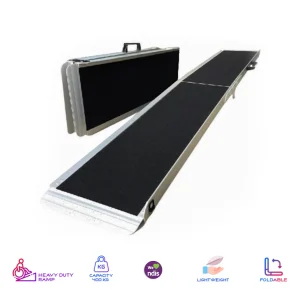
Portable ramps that fold for easier storage and transport. Commonly considered for suitable
home steps, temporary access and travel.
Compact and adjustable ramps for temporary access and suitable vehicle-loading applications
in cars, SUVs and vans.
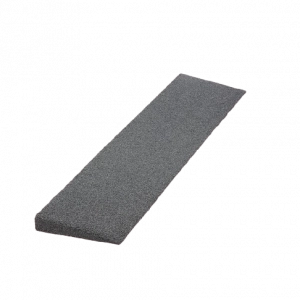
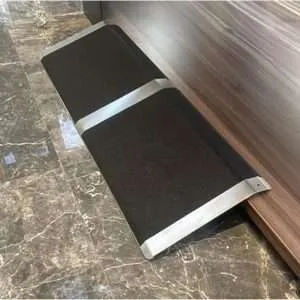
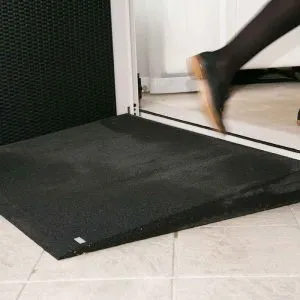
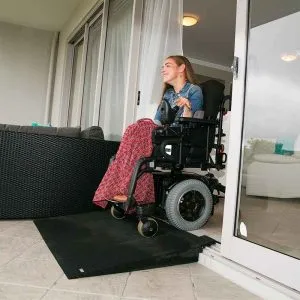
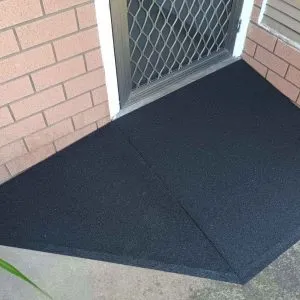
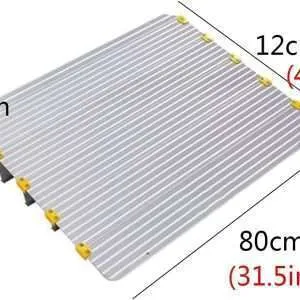
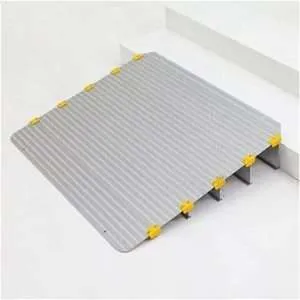
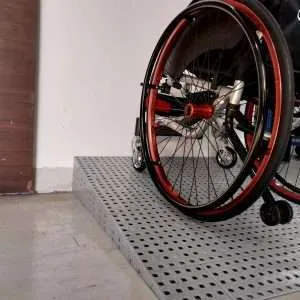
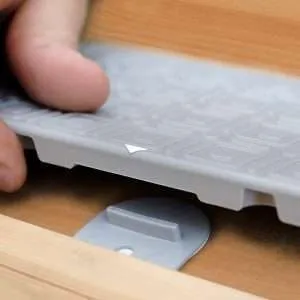
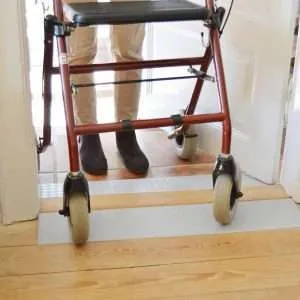
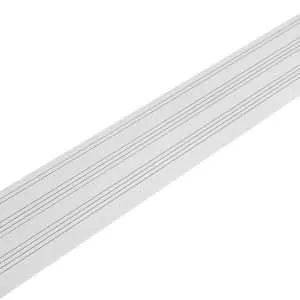
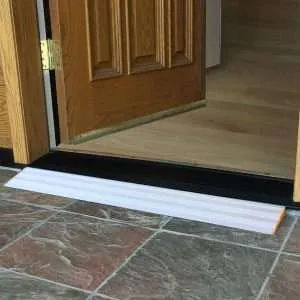
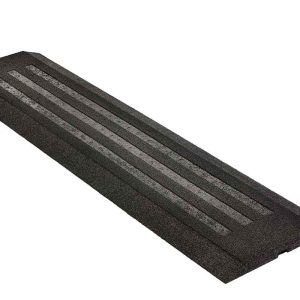
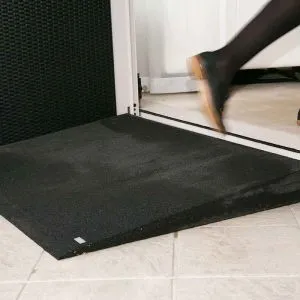
Low-profile ramps for suitable doorway lips, sliding-door tracks and small changes in level.
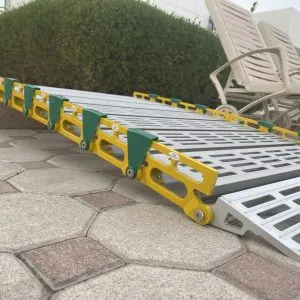
Roll-up portable access solutions for users requiring greater capacity or a longer movable ramp.
Higher-capacity ramp solutions for heavy powered mobility equipment and selected commercial applications.
Professionally designed access ramps where a fixed or purpose-built solution is more appropriate
than a portable ramp.
The right wheelchair ramp depends on what obstacle you need to overcome,
the vertical rise, available space and how the ramp will be used.
Consider: Threshold ramp
Check the exact threshold height, usable width and whether the door will still operate correctly.
Consider: Folding or portable ramp
Measure the actual rise, available ramp length, landing space and wheelchair width.
Consider: Portable wheelchair ramp
Check secure positioning, ramp length, rated load, width, handling weight and storage.
Consider: Telescopic or portable loading ramp
Check loading height, wheelchair or scooter weight, usable width and ramp length.
Consider: Heavy-duty ramp or boot hoist
Check equipment weight and whether manually controlling the equipment on a ramp is practical.
Consider: Custom installed ramp
Larger rises or regular use may require assessment of gradient, landings, handrails and structure.
A wheelchair ramp for home might be a small threshold product,
a portable folding ramp or a permanent access structure. The correct solution
depends on the height difference and how often the entrance will be used.
Before choosing a portable wheelchair ramp for home steps, measure:
Where there are multiple steps, a larger rise or a need for daily independent access,
consider our
custom wheelchair ramp installation
or
minor home modification services
.
The number of steps alone does not determine the correct wheelchair ramp length.
Two entrances with two steps may have very different total rises.
Measure the vertical rise from the lower surface to the upper landing.
For a low single step, a suitable portable ramp may be practical. For several steps,
the required ramp can become too long or difficult to position as a portable product.
Ramp gradient is the relationship between the vertical rise and the horizontal ramp run.
A 1:14 gradient means 14 units of horizontal run for
each 1 unit of rise.
A 1:14 gradient is an important reference for general accessible ramps in Australia,
but it should not be treated as a universal rule for every portable ramp, step ramp,
threshold ramp or equipment-loading ramp.
For planning a general ramp at a 1:14 gradient:
| Vertical Rise | 1:14 Ramp Run |
|---|---|
| 50mm | 700mm |
| 100mm | 1400mm |
| 150mm | 2100mm |
| 200mm | 2800mm |
| 300mm | 4200mm |
This is a planning example for a 1:14 gradient only. Actual requirements depend on
the type of ramp, application and site conditions.
A
threshold ramp
is a low-profile ramp designed for a small level difference at a doorway,
sliding-door track or similar transition.
Measure the exact threshold height and check whether the door can still open and close
correctly after the ramp is positioned.
A portable wheelchair ramp can be useful where access requirements change
between locations or where permanent construction is not appropriate.
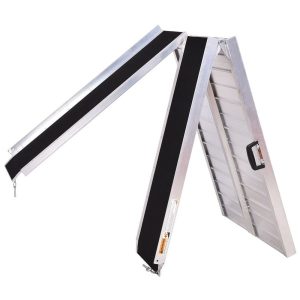
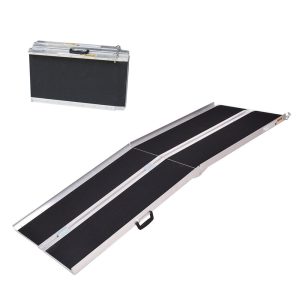
Usually provides one continuous surface and folds into a smaller shape for storage and transport.
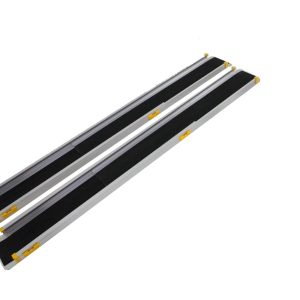
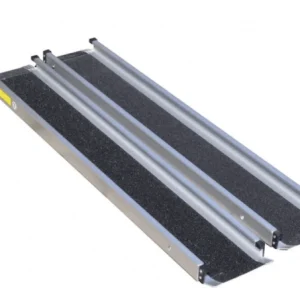
Typically uses two adjustable tracks that extend for use and retract into a compact size for storage.
A movable ramp design that can be rolled or folded for transport and storage depending on the product.
Always compare the open length, usable width, storage dimensions, ramp weight,
rated load, surface and secure placement method.
Portable wheelchair ramps are also commonly used to load mobility equipment into vehicles,
including manual wheelchairs, folding electric wheelchairs and portable mobility scooters.
This is different from creating an accessible ramp for a person travelling on the ramp.
If the ramp is being used to load unoccupied mobility equipment into a boot,
consider:
For heavier power wheelchairs or mobility scooters, repeatedly pushing equipment up a ramp
may not be practical. Gilani Engineering also supplies and installs
wheelchair and mobility scooter boot hoists
.
If the wheelchair user needs to remain seated in the wheelchair while travelling,
see our
wheelchair accessible vehicles
.
A mobility scooter ramp may be used either for access over a suitable
step or threshold, or for loading a scooter into a vehicle.
Check scooter width, equipment weight, ground clearance, wheelbase, available ramp width,
rated capacity and gradient before selecting a ramp.
Never exceed the manufacturer’s stated rated load or Safe Working Load.
For an occupied wheelchair, consider the combined load of the user, wheelchair,
batteries, mounted equipment and other relevant items.
Measure the widest point of the complete mobility device rather than only the seat width.
Remember controls, rear wheels, hand rims, armrests, footplates and any attached equipment.
Permanent building access may also be subject to additional clear-width requirements.
Gilani Engineering works with Occupational Therapists, participants, families,
carers and providers to identify appropriate access solutions.
Person & Mobility
Measurements
Carer Requirements
Environment
For larger access works, also see our
minor home modifications
and
custom wheelchair ramp installation
.
Depending on the participant’s circumstances and the proposed solution, a wheelchair ramp
may form part of an assistive technology, home adaptation or home modification solution.
A portable ramp is different from a permanently constructed access ramp requiring
site work or structural modification.
Gilani Engineering is a Registered NDIS Provider and can provide
quotations and relevant product information for participants and treating professionals.
Eligibility and funding remain subject to the participant’s plan, circumstances and
applicable NDIS criteria.
Wheelchair ramps and home-access modifications may also be relevant for eligible older
Australians receiving support through applicable aged-care arrangements.
The appropriate solution can range from a small threshold ramp to a more substantial
home modification depending on the person’s assessed needs and environment.
Eligible veterans may be able to access suitable mobility and home-access equipment
through applicable DVA arrangements where there is an assessed clinical need.
Contact our team for product information and quotation requirements.
Complete Ramp Range
Portable, folding, telescopic, threshold, rolling and heavy-duty solutions.
Custom Installation
Purpose-designed home access ramps where portable equipment is not appropriate.
NDIS Registered Provider
Equipment quotations and product information available.
OT Support
We work with participants, families, carers and treating professionals.
Vehicle Access Expertise
Boot hoists and other vehicle-loading solutions are also available.
Australia-Wide Delivery
Delivery is available for eligible online ramp products.
The correct length depends on the vertical rise and the gradient appropriate for the ramp type.
For a general 1:14 ramp, multiply the rise by 14 to estimate the horizontal run.
Step ramps, threshold ramps and equipment-loading ramps may involve different considerations.
Measure the actual vertical rise of the step. A suitable portable or folding wheelchair
ramp may work for some single-step entrances, but the required ramp length depends on the
rise, available space and intended use.
Measure the total rise rather than choosing a ramp based only on the number of steps.
Multiple steps may require a much longer ramp and can be better suited to a permanent or
custom-designed access solution.
A 1:14 gradient is an important reference for general accessible ramps.
Different provisions can apply to qualifying step ramps and threshold ramps.
Gradient is only one part of ramp design; width, landings, handrails, edge protection,
surface and site conditions may also matter.
A threshold ramp is a low-profile ramp designed to overcome a small level difference
at a doorway, sliding-door track or similar obstacle.
A folding ramp normally provides a continuous ramp surface and folds into a more compact
shape for storage or transport. Folding ramps are often used for temporary home access,
travel and selected vehicle-loading applications.
A telescopic ramp typically consists of two tracks that extend for use and retract for
storage. They are often considered for vehicle loading because they can be stored in a
comparatively compact space.
Selected portable ramps can be used to load suitable electric wheelchairs into cars,
SUVs and vans. Check equipment weight, loading height, ramp capacity, usable width and
ramp length. A boot hoist may be more practical for heavier chairs.
Selected ramps can suit mobility scooters where the width, total load, gradient and
product specifications are appropriate. Scooter ground clearance and wheelbase should
also be considered.
Do not exceed the manufacturer’s stated rated load or Safe Working Load.
For occupied wheelchair use, consider the combined weight of the wheelchair user,
wheelchair and relevant equipment.
A wheelchair ramp may be funded where the proposed solution meets applicable NDIS
requirements and relates to the participant’s disability support needs.
The pathway can differ between a simple portable ramp and a permanent home modification.
A ramp or home-access modification may be relevant where it forms part of an eligible
person’s assessed support needs and meets the applicable program requirements.
Speak with the relevant provider or treating professional and contact Gilani Engineering
for a suitable quotation.
Yes. Gilani Engineering provides custom wheelchair ramp installation for suitable
homes and access environments in Sydney and NSW.
Australia-wide delivery is available for eligible online ramp products.
Check the individual product page or contact our team for current freight information.
Send us the vertical rise, available space, doorway width and wheelchair or scooter model.
We can help determine whether a folding, portable, threshold, heavy-duty or custom installed ramp
is the better starting point.
Showing all 30 resultsSorted by popularity













 Sale!
Sale! 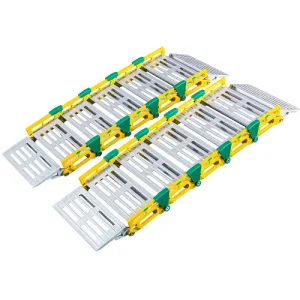











Compare ramp types, measurements and access requirements below. For an entrance that needs a fixed solution, explore our custom wheelchair ramp design and installation.
Different ramps solve different access problems. Choose the ramp type based on the
vertical rise, available space, mobility equipment and how the ramp will actually be used.
Portable ramps that fold for easier storage and transport. Commonly considered for suitable
home steps, temporary access and travel.
Compact and adjustable ramps for temporary access and suitable vehicle-loading applications
in cars, SUVs and vans.
Low-profile ramps for suitable doorway lips, sliding-door tracks and small changes in level.
Roll-up portable access solutions for users requiring greater capacity or a longer movable ramp.
Higher-capacity ramp solutions for heavy powered mobility equipment and selected commercial applications.
Professionally designed access ramps where a fixed or purpose-built solution is more appropriate
than a portable ramp.
The right wheelchair ramp depends on what obstacle you need to overcome,
the vertical rise, available space and how the ramp will be used.
Consider: Threshold ramp
Check the exact threshold height, usable width and whether the door will still operate correctly.
Consider: Folding or portable ramp
Measure the actual rise, available ramp length, landing space and wheelchair width.
Consider: Portable wheelchair ramp
Check secure positioning, ramp length, rated load, width, handling weight and storage.
Consider: Telescopic or portable loading ramp
Check loading height, wheelchair or scooter weight, usable width and ramp length.
Consider: Heavy-duty ramp or boot hoist
Check equipment weight and whether manually controlling the equipment on a ramp is practical.
Consider: Custom installed ramp
Larger rises or regular use may require assessment of gradient, landings, handrails and structure.
A wheelchair ramp for home might be a small threshold product,
a portable folding ramp or a permanent access structure. The correct solution
depends on the height difference and how often the entrance will be used.
Before choosing a portable wheelchair ramp for home steps, measure:
Where there are multiple steps, a larger rise or a need for daily independent access,
consider our
custom wheelchair ramp installation
or
minor home modification services
.
The number of steps alone does not determine the correct wheelchair ramp length.
Two entrances with two steps may have very different total rises.
Measure the vertical rise from the lower surface to the upper landing.
For a low single step, a suitable portable ramp may be practical. For several steps,
the required ramp can become too long or difficult to position as a portable product.
Ramp gradient is the relationship between the vertical rise and the horizontal ramp run.
A 1:14 gradient means 14 units of horizontal run for
each 1 unit of rise.
A 1:14 gradient is an important reference for general accessible ramps in Australia,
but it should not be treated as a universal rule for every portable ramp, step ramp,
threshold ramp or equipment-loading ramp.
For planning a general ramp at a 1:14 gradient:
| Vertical Rise | 1:14 Ramp Run |
|---|---|
| 50mm | 700mm |
| 100mm | 1400mm |
| 150mm | 2100mm |
| 200mm | 2800mm |
| 300mm | 4200mm |
This is a planning example for a 1:14 gradient only. Actual requirements depend on
the type of ramp, application and site conditions.
A
threshold ramp
is a low-profile ramp designed for a small level difference at a doorway,
sliding-door track or similar transition.
Measure the exact threshold height and check whether the door can still open and close
correctly after the ramp is positioned.
A portable wheelchair ramp can be useful where access requirements change
between locations or where permanent construction is not appropriate.
Usually provides one continuous surface and folds into a smaller shape for storage and transport.
Typically uses two adjustable tracks that extend for use and retract into a compact size for storage.
A movable ramp design that can be rolled or folded for transport and storage depending on the product.
Always compare the open length, usable width, storage dimensions, ramp weight,
rated load, surface and secure placement method.
Portable wheelchair ramps are also commonly used to load mobility equipment into vehicles,
including manual wheelchairs, folding electric wheelchairs and portable mobility scooters.
This is different from creating an accessible ramp for a person travelling on the ramp.
If the ramp is being used to load unoccupied mobility equipment into a boot,
consider:
For heavier power wheelchairs or mobility scooters, repeatedly pushing equipment up a ramp
may not be practical. Gilani Engineering also supplies and installs
wheelchair and mobility scooter boot hoists
.
If the wheelchair user needs to remain seated in the wheelchair while travelling,
see our
wheelchair accessible vehicles
.
A mobility scooter ramp may be used either for access over a suitable
step or threshold, or for loading a scooter into a vehicle.
Check scooter width, equipment weight, ground clearance, wheelbase, available ramp width,
rated capacity and gradient before selecting a ramp.
Never exceed the manufacturer’s stated rated load or Safe Working Load.
For an occupied wheelchair, consider the combined load of the user, wheelchair,
batteries, mounted equipment and other relevant items.
Measure the widest point of the complete mobility device rather than only the seat width.
Remember controls, rear wheels, hand rims, armrests, footplates and any attached equipment.
Permanent building access may also be subject to additional clear-width requirements.
Gilani Engineering works with Occupational Therapists, participants, families,
carers and providers to identify appropriate access solutions.
Person & Mobility
Measurements
Carer Requirements
Environment
For larger access works, also see our
minor home modifications
and
custom wheelchair ramp installation
.
Depending on the participant’s circumstances and the proposed solution, a wheelchair ramp
may form part of an assistive technology, home adaptation or home modification solution.
A portable ramp is different from a permanently constructed access ramp requiring
site work or structural modification.
Gilani Engineering is a Registered NDIS Provider and can provide
quotations and relevant product information for participants and treating professionals.
Eligibility and funding remain subject to the participant’s plan, circumstances and
applicable NDIS criteria.
Wheelchair ramps and home-access modifications may also be relevant for eligible older
Australians receiving support through applicable aged-care arrangements.
The appropriate solution can range from a small threshold ramp to a more substantial
home modification depending on the person’s assessed needs and environment.
Eligible veterans may be able to access suitable mobility and home-access equipment
through applicable DVA arrangements where there is an assessed clinical need.
Contact our team for product information and quotation requirements.
Complete Ramp Range
Portable, folding, telescopic, threshold, rolling and heavy-duty solutions.
Custom Installation
Purpose-designed home access ramps where portable equipment is not appropriate.
NDIS Registered Provider
Equipment quotations and product information available.
OT Support
We work with participants, families, carers and treating professionals.
Vehicle Access Expertise
Boot hoists and other vehicle-loading solutions are also available.
Australia-Wide Delivery
Delivery is available for eligible online ramp products.
The correct length depends on the vertical rise and the gradient appropriate for the ramp type.
For a general 1:14 ramp, multiply the rise by 14 to estimate the horizontal run.
Step ramps, threshold ramps and equipment-loading ramps may involve different considerations.
Measure the actual vertical rise of the step. A suitable portable or folding wheelchair
ramp may work for some single-step entrances, but the required ramp length depends on the
rise, available space and intended use.
Measure the total rise rather than choosing a ramp based only on the number of steps.
Multiple steps may require a much longer ramp and can be better suited to a permanent or
custom-designed access solution.
A 1:14 gradient is an important reference for general accessible ramps.
Different provisions can apply to qualifying step ramps and threshold ramps.
Gradient is only one part of ramp design; width, landings, handrails, edge protection,
surface and site conditions may also matter.
A threshold ramp is a low-profile ramp designed to overcome a small level difference
at a doorway, sliding-door track or similar obstacle.
A folding ramp normally provides a continuous ramp surface and folds into a more compact
shape for storage or transport. Folding ramps are often used for temporary home access,
travel and selected vehicle-loading applications.
A telescopic ramp typically consists of two tracks that extend for use and retract for
storage. They are often considered for vehicle loading because they can be stored in a
comparatively compact space.
Selected portable ramps can be used to load suitable electric wheelchairs into cars,
SUVs and vans. Check equipment weight, loading height, ramp capacity, usable width and
ramp length. A boot hoist may be more practical for heavier chairs.
Selected ramps can suit mobility scooters where the width, total load, gradient and
product specifications are appropriate. Scooter ground clearance and wheelbase should
also be considered.
Do not exceed the manufacturer’s stated rated load or Safe Working Load.
For occupied wheelchair use, consider the combined weight of the wheelchair user,
wheelchair and relevant equipment.
A wheelchair ramp may be funded where the proposed solution meets applicable NDIS
requirements and relates to the participant’s disability support needs.
The pathway can differ between a simple portable ramp and a permanent home modification.
A ramp or home-access modification may be relevant where it forms part of an eligible
person’s assessed support needs and meets the applicable program requirements.
Speak with the relevant provider or treating professional and contact Gilani Engineering
for a suitable quotation.
Yes. Gilani Engineering provides custom wheelchair ramp installation for suitable
homes and access environments in Sydney and NSW.
Australia-wide delivery is available for eligible online ramp products.
Check the individual product page or contact our team for current freight information.
Send us the vertical rise, available space, doorway width and wheelchair or scooter model.
We can help determine whether a folding, portable, threshold, heavy-duty or custom installed ramp
is the better starting point.
We're here to help you find the right solutions for your needs
Send us your enquiry and our team will contact you with product details, pricing and availability.