


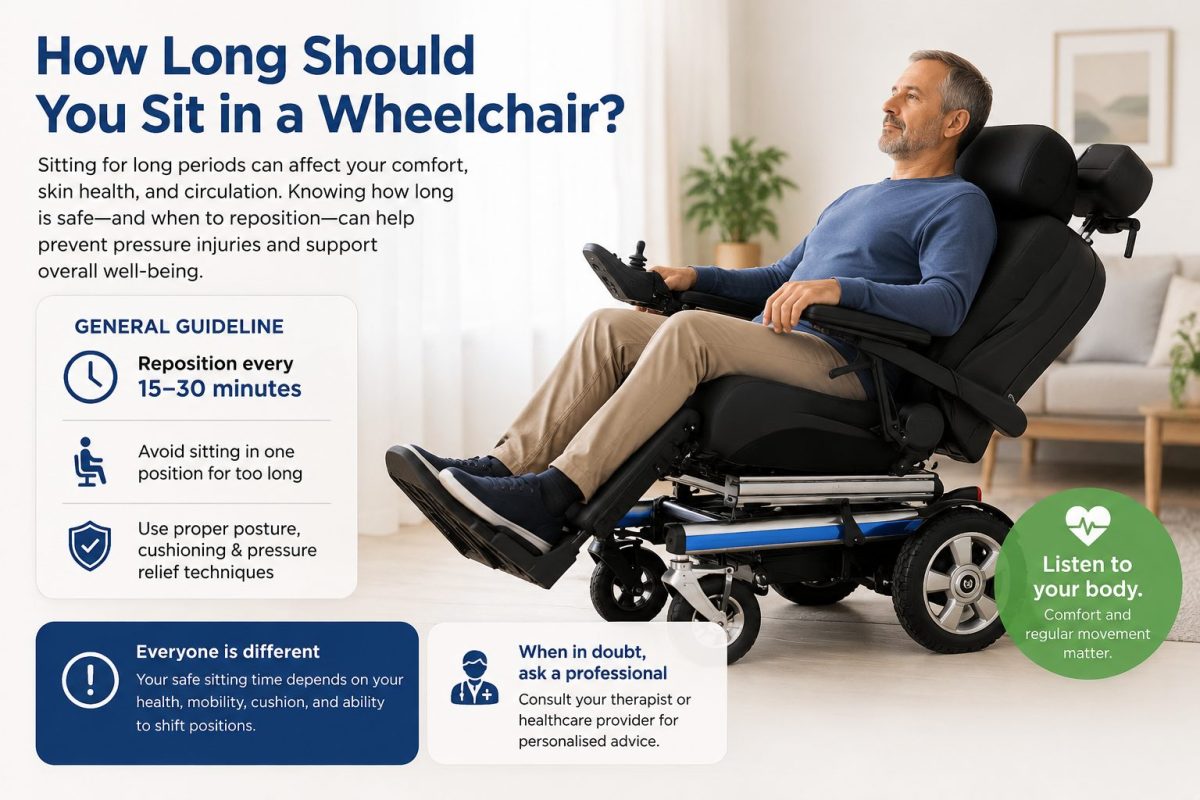
For people with mobility limitations, sitting on a wheelchair provided them not only with physical support but also with a way to let them move around and participate more. However, despite its numerous advantages, there are still some important considerations that wheelchair users need to think of to avoid impacting their general well-being.
People requiring long-term seating support may also compare ergonomic swivel seat electric wheelchairs, supportive wheelchair back supports and pressure-relieving wheelchair cushions designed for improved comfort and posture support.
This blog post from Gilani Engineering will clarify the pitfalls of sitting in a wheelchair all day long and what can be done to avoid the adverse health effects of a sedentary lifestyle.
Technical review by: Ray Gilani – Specialist in Mobility Equipment & Accessibility Solutions
Health implications of prolonged sitting on a wheelchair
There are several health implications brought on by sitting on a wheelchair for a long period such as:
1. Pressure sores
Manual and electric wheelchair users are more prone to pressure sores if the wheelchair they use does not offer sufficient support or if they’re not changing positions often while sitting on the chair.
People requiring improved seating comfort may also compare ergonomic wheelchair back support systems and supportive custom posture support seating designed to reduce pressure concentration and improve positioning.
2. Musculoskeletal issues
Long periods of sitting can cause various musculoskeletal issues such as muscle stiffness, joint contractures, and decreased range of movement. Wheelchair users often have problems in their shoulders, hips, and back from non-movement.
Supportive seating products such as wheelchair lumbar and back supports may assist with maintaining better posture and reducing seating discomfort during prolonged wheelchair use.
3. Decreased cardiovascular fitness
The cardiovascular health of wheelchair users often deteriorates because of prolonged sitting on the chair and lack of frequent movement and exercise. Over time, the decreased muscular activity and blood circulation may worsen existing cardiovascular problems or cause one.
Users improving mobility and movement may also compare practical mobility scooters and supportive walking aids designed for improved day-to-day mobility and independence.
4. Respiratory problems
Sitting for extended periods can also affect the wheelchair user’s respiratory health. Common respiratory problems include reduced lung capacity, lung infections and other pulmonary issues.
Maintaining appropriate seating posture with products such as swivel seat electric wheelchairs and supportive seating systems may assist with positioning and upper body alignment.
5. Digestive irregularities
Extended durations of sitting can also cause digestive irregularities. As such, gastrointestinal issues including constipation and stomach ache because of indigestion may occur.
Users requiring improved daily support may also compare practical health and medical products and supportive bedroom aids designed for comfort and accessibility.
6. Skin complications
In addition to bed sores, prolonged sitting can also cause friction burns, skin irritation, and dry skin especially if hygiene and regular skin care are neglected.
Pressure management products such as pressure care mattresses and specialised seating cushions may help reduce prolonged pressure exposure.
7. Psychological effects
Aside from physical health issues, wheelchair users are also at risk of mental health problems especially if they are confined to a wheelchair for extended periods. They are prone to experiencing feelings of despair, low self-esteem and loneliness especially if they have little to none social interaction with others because of accessibility issues.
Improving accessibility through supportive wheelchair ramps, grab rails and practical mobility products can help users maintain greater independence and community participation.
8. Obesity and other metabolic disorders
Since they’re not active and engaging in physical activities, wheelchair users are at risk of gaining weight and becoming obese and developing metabolic disorders such as diabetes. These conditions are sometimes the end result of a sedentary lifestyle.
Users requiring greater day-to-day mobility may also compare supportive wheelchair solutions and practical mobility aids designed to improve independence and accessibility.
Importance of regular movement and weight shifting
To avoid the above-mentioned health conditions, wheelchair users are recommended to move and shift their weight frequently, especially during long periods of sitting down. Wheelchair users can lessen the pressure and lower the risk of pressure sores by regularly moving.
Regular movement also contributes to better muscle and bone health, improves blood circulation and lowers the risk of respiratory diseases.
Supportive seating systems such as swivel seat wheelchairs may also improve transfer accessibility and reduce strain during movement.
Proper posture and pressure relief techniques
To guarantee long term comfort, wheelchair users need to learn proper posture (or wear posture corrector for appropriate support) and pressure relief techniques. Having proper posture even if confined in a wheelchair improves digestive and respiratory health while avoiding pain because of joint and muscle problems.
Additionally, applying efficient pressure relief techniques such as shifting weights, changing positions often, and using specialty cushions helps distribute pressure throughout the body.
People improving long-term seating posture may also compare supportive wheelchair back supports, ergonomic custom posture seating and pressure management solutions designed for daily wheelchair comfort.
FAQs
Is it good to sit in a wheelchair all day?
No. For those with disabilities and are reliant on a wheelchair to help with their mobility, they might prefer to sit on their wheelchair for several hours in a day instead of being confined in a bed. However, the maximum number of hours a wheelchair user can sit on a wheelchair is only 4 hours. Sitting beyond these recommended hours can lead to health complications.
Do people in wheelchairs get tired of sitting?
Yes. Wheelchair users do feel tired from prolonged sitting. While sitting in a wheelchair provides mobility and support, remaining in a seated position during their waking hours (approximately 16-18 hours) can lead to physical and mental fatigue.
How long can you use a wheelchair?
Wheelchair users are advised to only sit on a wheelchair from a minimum of 2 hours to a maximum of 4 hours daily.
If you're looking to improve comfort and reduce pressure injury risk, our range of wheelchair cushions is a good place to start.
Shop Wheelchair Cushions — Now 20–30% Off
Choose from pressure care, air cell, memory foam, gel and positioning cushions — suitable for manual and electric wheelchairs, aged care, disability support and daily home use. 28 models available.
From $49 · 20–30% off storewide · NDIS funding available · Free delivery on online orders
Browse Wheelchair Cushions → Ask Our TeamNot sure which cushion suits you? Call (02) 8740 8963 · Visit our Showroom: 14 Smithfield Rd, Smithfield NSW



