


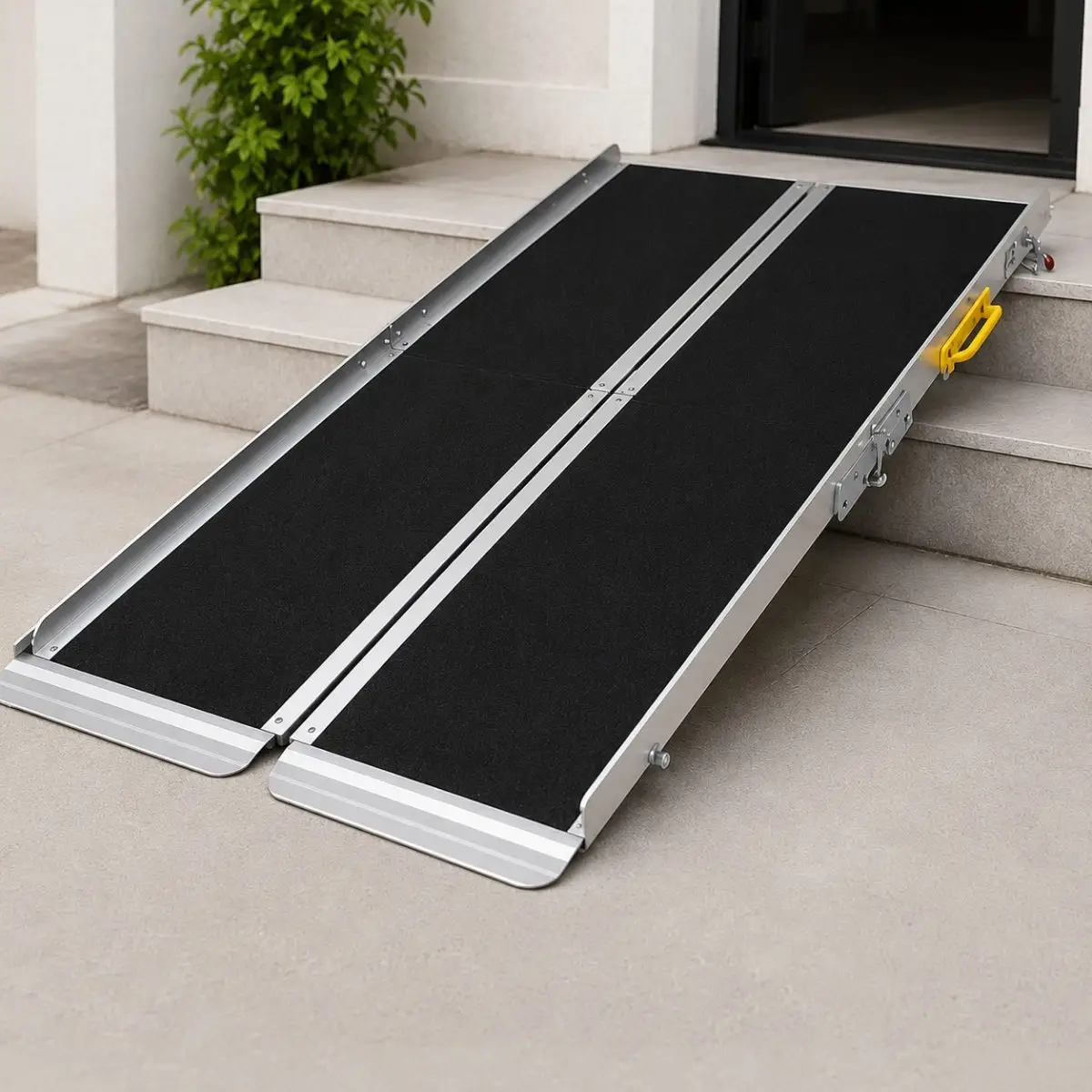
What Is A Step Ramp? Wheelchair Access Ramps Explained
A step ramp is a simple accessibility solution designed to help people move safely over steps, raised entryways and uneven surfaces. They are commonly used in homes, aged care facilities, disability support settings and commercial buildings where easier wheelchair access is needed.
Many people searching for a step ramp, wheelchair step ramp, portable wheelchair ramp or disability access ramp are looking for a safer and more practical way to improve mobility access without major building modifications.
Step ramps are commonly used with wheelchairs, walkers, mobility scooters and rehabilitation equipment to help improve everyday accessibility and reduce barriers caused by steps and thresholds.
What Is a Step Ramp?
A step ramp, also known as a wheelchair access ramp, is an inclined surface designed to bridge height differences between two areas. Instead of lifting mobility equipment over a step or raised surface, the ramp creates a smoother transition for safer access.
These ramps are commonly used in residential homes, healthcare environments, aged care settings, schools and public access areas.
Many Australians comparing wheelchair ramps Australia, mobility access ramps and portable access ramps prioritise safety, portability and ease of use for everyday mobility support.
Step ramps are typically made from durable materials such as aluminium, rubber or reinforced lightweight metals designed for regular use indoors and outdoors.
Benefits of Step Ramps
Step ramps can make day-to-day movement easier and safer for people using mobility aids or requiring accessibility support.
- Improved wheelchair accessibility
- Easier access over steps and thresholds
- Reduced lifting and manual handling
- Suitable for mobility scooters and walkers
- Portable options available for temporary access
- Useful for homes, aged care and commercial buildings
Many families and carers choose portable wheelchair ramps because they are lightweight, practical and easier to reposition when required.
Types of Step Ramps
Threshold Ramps
Threshold ramps are designed for smaller height differences such as sliding door tracks, entryways and raised flooring transitions.
These ramps are commonly used indoors and are popular for homes requiring quick and simple wheelchair access support.
For smaller access points and doorways, many users explore threshold wheelchair ramps designed for easier day-to-day accessibility.
Portable Wheelchair Ramps
Portable wheelchair ramps are designed to be moved and stored easily when not in use. They are commonly used for temporary access situations including vehicle loading, travel and community access.
Many people searching for folding wheelchair ramps or portable access ramps prioritise lightweight designs and easier transport.
Users requiring portable mobility support also commonly compare portable electric wheelchairs and compact accessibility equipment for easier transport and travel.
Modular Access Ramps
Modular ramps are commonly installed in commercial buildings, disability support environments and public access areas where a more permanent accessibility solution is required.
These ramps use prefabricated sections that can be customised depending on the required length, layout and access conditions.
Many disability support environments combine modular ramps with patient transfer equipment and rehabilitation mobility aids to improve safer movement and accessibility.
Wheelchair Ramps and Mobility Support
Wheelchair ramps are often combined with mobility and rehabilitation equipment to improve independence and day-to-day accessibility.
People comparing step ramps for wheelchairs and disability access ramps also commonly explore:
- manual wheelchairs
- portable electric wheelchairs
- mobility scooters
- patient transfer equipment
- tilt in space wheelchairs
- tilt and reclining wheelchairs
Combining the right mobility equipment with suitable wheelchair ramps can help improve safety, accessibility and ease of movement for both users and carers.
Installing a Step Ramp
The installation process depends on the ramp type, location and required accessibility support.
Assess the Area
Measure the height difference and identify the available installation space. It is also important to consider doorway clearances, surface stability and wheelchair turning areas.
Choose the Right Ramp
Select a ramp suitable for the required height, weight capacity and mobility equipment being used.
Some users may require portable ramps, while others may benefit from more permanent modular ramp systems.
Check Ramp Safety
After installation, ensure the ramp is stable, secure and suitable for safe wheelchair use. Regular inspections can help identify wear or movement over time.
Frequently Asked Questions
Are step ramps only used for wheelchairs?
No. Step ramps are also commonly used with walkers, mobility scooters, trolleys and rehabilitation equipment.
Can wheelchair ramps be used outdoors?
Yes. Many wheelchair ramps are designed for both indoor and outdoor accessibility applications depending on the ramp material and installation type.
What is the difference between a threshold ramp and a portable ramp?
Threshold ramps are generally used for small height differences, while portable ramps are designed for temporary access situations and larger step heights.
Are portable wheelchair ramps easy to store?
Many portable wheelchair ramps are designed to fold or collapse for easier transport and storage when not in use.
Conclusion
Step ramps provide a practical way to improve wheelchair access and mobility support across homes, aged care facilities and commercial environments.
Whether you need a wheelchair step ramp, portable wheelchair ramp or disability access ramp, choosing the right ramp can help improve safety, independence and easier day-to-day movement.
Explore our range of wheelchair ramps, portable electric wheelchairs, mobility scooters, patient transfer equipment and mobility support equipment designed for everyday accessibility and independence.



