


 Free Delivery Online Order
 NDIS Funding Assistance Available
 5-Star Rating
 Home Trials Available
 Trusted by Customers




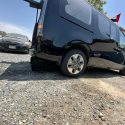



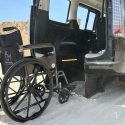
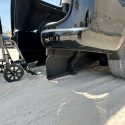

Description
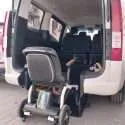
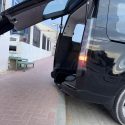
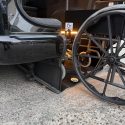
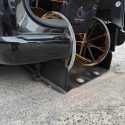
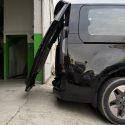
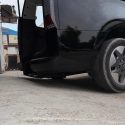
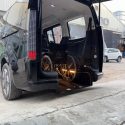
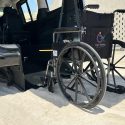
G24 NoRamp® Wheelchair Accessible Taxi Conversion
Built for Australian Fleets, NDIS Transport & Commercial Operators
The G24 NoRamp® lowered floor conversion is engineered for one purpose:
to make wheelchair transport faster, easier, and commercially viable in real-world Australian conditions.
Whether you’re operating a taxi fleet, NDIS transport service, airport transfer business, or hospital transport, this system eliminates the biggest bottlenecks in wheelchair loading – space, time, and manual effort.
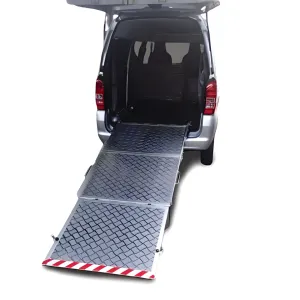
Instead of relying on long ramps or slow lifts, the NoRamp® system delivers fast, controlled wheelchair access directly within the vehicle footprint.
[smartslider3 slider=”2″]
Who This Is For
We work with:
- Taxi fleet operators across Australia
- NDIS transport providers
- Airport transfer companies
- Hospitals and patient transport services
- Community transport organisations
If your business depends on moving wheelchair passengers efficiently, this is built for you.
The Problem We Solve
Traditional wheelchair access systems are inefficient:
- Rear ramps need too much space
- Lifts are slow and mechanical-heavy
- Drivers deal with extra steps and physical strain
- You lose time on every pickup
- Tight urban areas (Sydney, Melbourne, etc.) make loading harder
That’s not just inconvenience –
that’s lost revenue, slower turnaround, and driver fatigue.
What Makes G24 NoRamp® Different
The G24 NoRamp® system removes the friction:
- No external ramp required
- Minimal rear clearance needed
- Faster passenger turnaround
- Reduced manual handling for drivers
- Designed for high-frequency daily commercial use
This isn’t a “nice upgrade.”
It’s a commercial efficiency tool.
Real-World Results (What Actually Changes)
Operators using NoRamp® systems experience:
- Faster pickups at taxi ranks and hospitals
- More trips completed per shift
- Less driver fatigue and complaints
- Better reliability in tight urban environments
- Improved passenger experience (smoother entry)
This is the difference between
a vehicle that “works”
and
a vehicle that performs commercially.
See It In Real Use
This isn’t theory —
watch how the NoRamp® system performs in real curbside conditions, tight access zones, and daily transport scenarios.
Built for Australian Conditions
Australia isn’t built for perfect loading environments.
You deal with:
- High curbs
- Tight street parking
- Vehicles parked behind
- Busy taxi ranks
- Hospital pickup zones
The G24 NoRamp® system is designed for exactly that.
Why Operators Choose NoRamp® Over Traditional Systems
Global Comparison: NoRamp® vs Ramp vs Lift Wheelchair Access Systems
Wheelchair access systems vary significantly in how they perform in real-world conditions. This comparison highlights the key differences between NoRamp®, traditional ramp systems and lift-based conversions across usability, efficiency and commercial operation.
| Feature | NoRamp® System | Ramp Conversion | Lift Conversion |
|---|---|---|---|
| Access Method | No external ramp required | Rear ramp deployment | Powered lift platform |
| Rear Clearance Required | Minimal | High (full ramp length) | Moderate |
| Loading Speed | Fast, controlled entry | Slower due to ramp setup | Slowest (multi-stage lift cycle) |
| Ease of Use (Daily) | Designed for repeated daily use | Requires more handling | Requires operation sequence |
| Manual Handling | Reduced operator effort | Higher physical handling | Moderate handling |
| Urban Environment Suitability | Excellent for tight streets, ranks, parking | Limited in confined spaces | Moderate depending on space |
| Vehicle Footprint During Loading | Contained within vehicle footprint | Extends beyond vehicle | Extends partially |
| Performance on Uneven Surfaces | More practical where vehicle can access | Limited by ramp angle and ground | Less adaptable |
| Passenger Experience | Smoother, more integrated entry | Long ramp approach | Vertical lift experience |
| Commercial Transport Efficiency | Optimised for high-frequency use | Less efficient for repeated loading | Lower throughput |
| Driver Workflow | Simplified and faster | More steps required | Multi-step operation |
| Typical Use Case | Taxi fleets, NDIS, airport transfers, commercial transport | Private and general use | Specialised or heavy-duty applications |
| System Complexity | Integrated design | Mechanical ramp system | Mechanical + hydraulic/electrical system |
| Best Fit Globally | High-frequency urban and commercial transport environments | General accessibility use | Specific use cases requiring vertical lift |
NoRamp® is designed for environments where speed, space and repeatable access matter – particularly in taxi, fleet and commercial passenger transport applications.
Why This Matters for Your Business
If you’re running a fleet, every second matters.
- Slower loading = fewer trips
- More effort = driver burnout
- More complexity = higher risk of issues
The NoRamp® system simplifies everything:
Faster workflow
Less physical strain
More predictable operations
The Next Step
If you’re serious about improving your fleet performance:
Request a Fleet Assessment today
Call (02) 8740 8963
We’ll evaluate:
- Your current vehicles
- Your operating environment
- Your daily transport challenges
And recommend the best configuration for your needs.
Frequently Asked Questions (FAQs)
What is a NoRamp® wheelchair accessible vehicle?
A NoRamp® vehicle uses a lowered floor design that allows wheelchair access without deploying a long external ramp, making loading faster and more practical in tight environments.
Is this suitable for NDIS transport providers in Australia?
Yes. The G24 NoRamp® conversion is ideal for NDIS transport services requiring reliable, repeatable, and efficient wheelchair access for daily use.
How is NoRamp® different from a ramp or lift system?
Ramp systems require significant rear space, while lifts are slower and mechanical-heavy. NoRamp® eliminates both issues by enabling direct access within the vehicle footprint.
Can this be used for taxi fleets?
Absolutely. This system is specifically designed for high-frequency taxi and commercial fleet operations, where speed and efficiency are critical.
Does it work in tight urban areas like Sydney or Melbourne?
Yes. The system is built for tight streets, taxi ranks, hospitals, and airport pickup zones, where traditional ramps often fail.
What vehicles can be converted with the G24 system?
Typically, vehicles like the Hyundai Staria and similar models are used. Contact Gilani Engineering for vehicle compatibility.
How do I get started?
The best step is to request a Fleet Assessment. This allows us to understand your operation and recommend the right setup.







Olivia Williams –
Got the Wheelchair Accessible Taxi Conversion done and the quality of work is excellent. Everything feels secure and well-finished. It’s made transport much easier and more comfortable. Really happy with how it turned out.